
17+ Years Experience
Dr. Varun Tomke ensures precise surgical release of fibrotic tissue bands, restoring cheek elasticity safely.
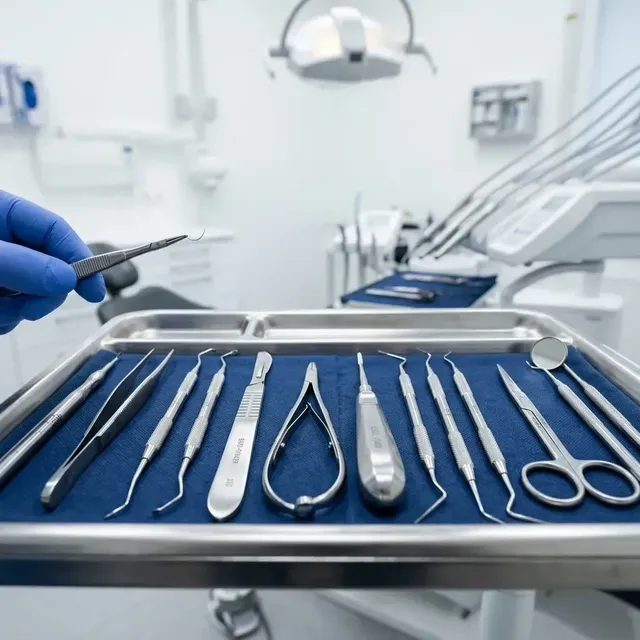
Restore your mouth opening capacity and jaw flexibility with our specialized surgical and medical treatment for Oral Submucous Fibrosis (OSMF).
Quick Clinic Details
What Is Restricted Mouth Surgery?
Restricted mouth opening is most commonly caused by Oral Submucous Fibrosis (OSMF)—a chronic, progressive, pre-cancerous condition characterized by the formation of dense fibrous bands inside the cheek tissues. This is heavily triggered by the use of gutka, areca nut, betel nut, mawa, or tobacco, which irritates the cheeks, leading to scarring and tissue stiffness.
For early-stage OSMF, we offer medical therapies, including local injections of steroids, placental extracts, and hyaluronidase to soften the tissues. In advanced stages where mouth opening is severely restricted (less than 20mm), surgical intervention is required.
Restricted mouth surgery (fibrotomy) involves cutting or releasing the tight fibrous bands inside the cheeks using a scalpel or dental laser. This is followed by placing tissue grafts if needed and starting aggressive jaw exercises to maintain and increase the mouth opening.
Why Choose Us
We plan restricted mouth surgery with thorough tissue checks, habit counseling, and detailed post-surgical physical therapies.
Dr. Varun Tomke ensures precise surgical release of fibrotic tissue bands, restoring cheek elasticity safely.
We utilize dental lasers and advanced surgical tools to release bands with minimal bleeding and faster healing.
We conduct detailed tissue evaluations to check for dysplasia and monitor tissue health at every stage.
We provide supportive counseling and medical therapies to help patients quit gutka, tobacco, and areca nut.
The Procedure
We measure your maximum inter-incisal mouth opening in millimeters, check cheek stiffness, and review your dental history.
For moderate cases, we may administer local injections into the fibrous bands to reduce inflammation and soften tissues.
Under local anesthesia, the surgeon carefully makes incisions inside the cheeks to cut and release the tight fibrous bands.
If the incision leaves a large raw area, a skin graft, placental membrane, or local tissue flap is placed to cover the wound and promote clean healing.
After surgery, we guide you through aggressive jaw exercises using wooden spatulas or mouth-gags to prevent new scar tissue from restricting the opening again.
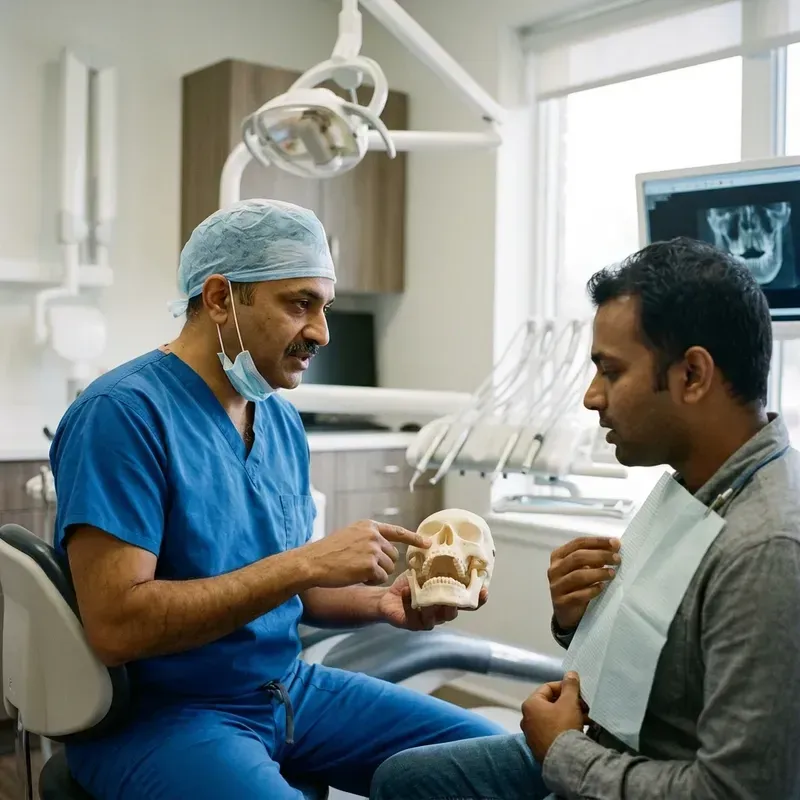
Why is post-surgical physiotherapy crucial?
Without immediate and daily jaw-stretching exercises after surgery, the healing tissues will contract and form new scars, which can restrict the mouth opening again.
Surgical and medical therapies for OSMF
Incising the deep fibrous scars inside the cheek mucosa to immediately release jaw tension and increase opening.
Using dental lasers to vaporize scar bands with minimal bleeding, reduced post-operative pain, and cleaner healing.
Intralesional medical injections of hyaluronidase and dexamethasone to break down collagen fibers in early stages.
Benefits
Treating OSMF early restores your mouth opening, allows proper dental checkups, and reduces the risk of oral cancer transformation.
Habit cessation and long-term care
Medical and surgical treatments for restricted mouth opening will fail completely if the patient continues chewing gutka, areca nut, betel nut, pan masala, or tobacco. The chemical irritants in these products will immediately trigger new scar formation and worsen the condition.
The cost depends on the stage of OSMF, whether it requires intralesional injections or surgery, and whether tissue grafting is needed. A detailed estimate is provided after checking your tissue flexibility.
Frequently Asked Questions
In the early stages of OSMF, mouth opening can often be improved without surgery through lifestyle changes, completely quitting tobacco/areca nut, taking antioxidant medicines, and getting intralesional injections. Advanced stages with severe restriction require surgery.
A healthy normal mouth opening for an adult is between 35 to 50 mm, which is roughly equal to the vertical height of 3 to 4 of your fingers placed together between your front teeth. An opening of less than 30 mm is considered restricted.
Intralesional injection therapy ranges from Rs. 1,500 to Rs. 3,500 per session. Surgical fibrotomy release under local anesthesia, including laser band excision, typically ranges from Rs. 15,000 to Rs. 35,000+, depending on whether tissue grafts are needed.
The fibrous bands are made of dense, scarred collagen fibers. Areca nut contains chemicals that stimulate cells (fibroblasts) to produce excess collagen while blocking its breakdown, leading to thick, rigid scarring inside the cheeks.
OSMF is classified as a pre-cancerous condition (potentially malignant disorder). While not cancer itself, it creates a highly vulnerable tissue state. The malignant transformation rate of OSMF to oral cancer is around 7% to 13%, making early treatment and quitting habits vital.
It can close again if you do not perform jaw exercises daily or if you resume chewing gutka and betel nut. Diligent post-surgical physical therapy is absolutely mandatory to keep the jaw muscles stretched during wound healing.
OSMF causes oxidative stress and cell damage in cheek tissues. Antioxidant supplements, specifically Lycopene, Beta-carotene, and multivitamins, help reduce tissue damage, improve blood flow, and aid in softening the scarred cheek linings.